Einstein Makes Your Maps Work: The Physics Behind GPS
- Jul 9, 2025
- 2 min read
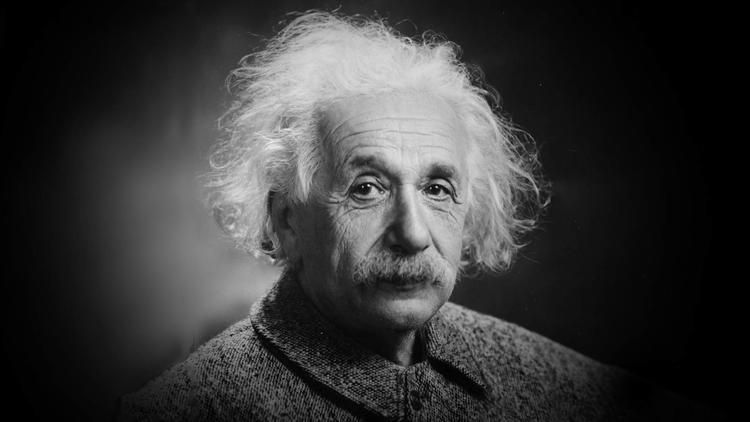
Every time you open Google Maps to find the nearest coffee shop, you’re using one of the most advanced technologies ever created: the Global Positioning System (GPS). But here’s the mind-bending part—GPS wouldn’t work without Einstein’s theory of relativity.
How GPS Works (The Basics)
The GPS system uses a network of over 30 satellites orbiting Earth.
Each satellite constantly broadcasts its location and the exact time (from onboard atomic clocks).
Your phone listens to signals from at least 4 satellites and calculates how long each signal took to reach you.
By measuring these tiny differences, it figures out your position on Earth—down to a few meters.
Where Einstein Comes In
Einstein’s theories of special relativity and general relativity both affect how time flows for GPS satellites compared to clocks on Earth:
Special Relativity: Because satellites move so fast (about 14,000 km/h), time on them actually runs slower than on Earth—by about 7 microseconds per day.
General Relativity: But satellites are also higher up in weaker gravity. That makes their clocks tick faster—by about 45 microseconds per day.
Add them together, and satellite clocks tick 38 microseconds faster per day than clocks on Earth.
Why That Matters
It doesn’t sound like much, but if GPS ignored relativity, your location would drift by about 10 kilometers (6 miles) every day. After just a few minutes, your maps would already be way off.
So every GPS satellite is programmed with relativity corrections—literally applying Einstein’s math—to keep your directions accurate.
Final Thought
The next time your phone guides you to the right turn or helps you track a delivery, remember: it’s not just satellites making it happen. Einstein’s century-old theories are working quietly in the background—proving that even abstract physics can shape your everyday life.



.png)